Curriculum Materials
The Society develops and distributes, free of charge, a wide variety of up-to-date, high quality educational materials and curriculum resource pieces to teachers and classrooms. Our educational resources focus on the scientific process, the lifesciences, biomedical research, and careers in the lifesciences. These materials are developed in alignment with the Next Generation Science Standards, and serve as instructional curriculum resource pieces, as substitute teacher assignment packets, and at the high school level, support-items for student-directed independent research. Some materials are available as hardcopies in full-classroom sets. They are also available for download. Please inquire about hardcopies.
Supporting Elementary Instruction in The Next Generation Science Standards
- From Molecules to Organisms: Structures and Processes
- Earth’s Systems
- Earth and Human Activity
- Heredity: Inheritance and Variation of Traits
- Biological Evolution: Unity and Diversity
Supporting Middle School Instruction in The Next Generation Science Standards
- From Molecules to Organisms: Structures and Processes
- Heredity: Inheritance and Variation of Traits
- Understanding the Scientific Enterprise: The Nature of Science
Supporting High School Instruction in The Next Generation Science Standards
- From Molecules to Organisms: Structures and Processes
- Heredity: Inheritance and Variation of Traits
- Biological Evolution: Unity and Diversity
- Understanding the Scientific Enterprise: The Nature of Science
Jump To
High School Curriculum Materials
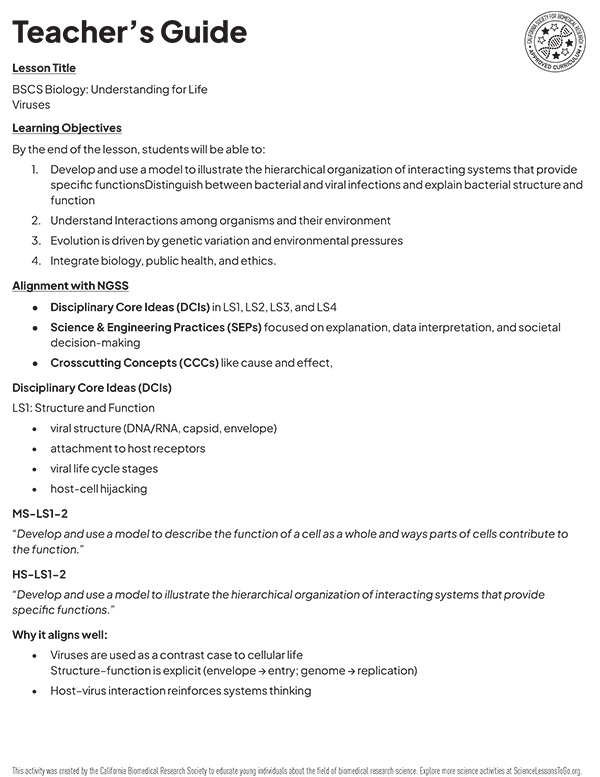
Viruses: BSCS Biology: Understanding for Life
Lesson
Includes a Teacher’s Guide. This NGSS-aligned resource explores virology, vaccines, viral evolution, public health, and emerging infectious diseases, connecting biology to real-world research and decision-making. It supports LS1–LS4 standards and Science and Engineering Practices in data analysis, explanation, and evidence-based argumentation.
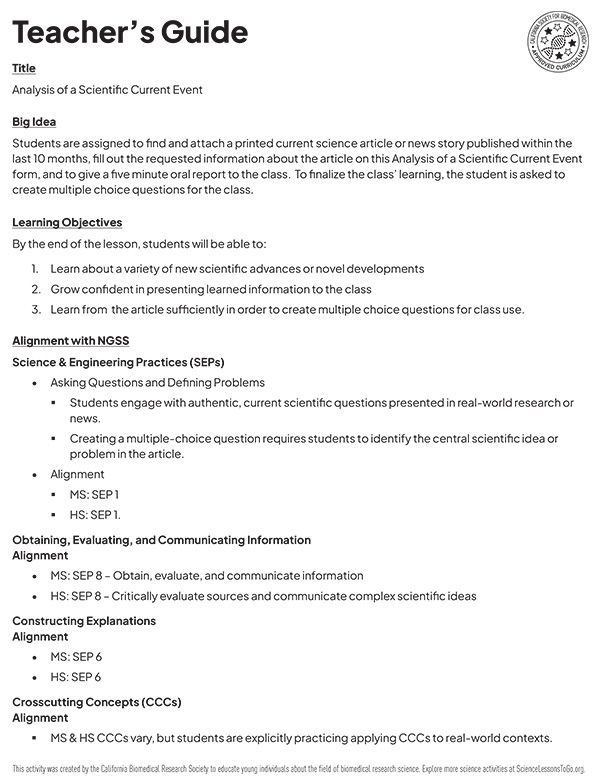
Analysis of a Scientific Current Event
Lesson
Includes a Teacher’s Guide. This NGSS-aligned activity engages middle and high school students in evaluating scientific news and biomedical research while building scientific literacy, critical thinking, communication, and evidence-based reasoning. It supports SEPs 1, 6, and 8, Crosscutting Concepts, and core ideas across LS, PS, ESS, and ETS.
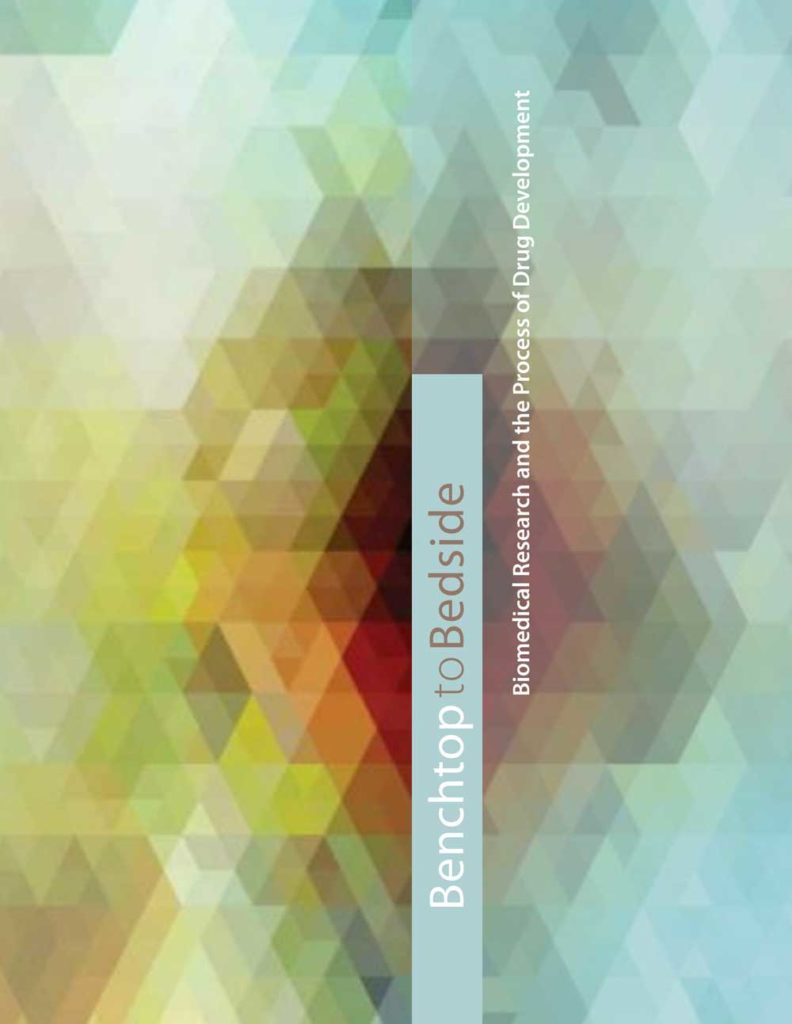
Benchtop to Bedside: Biomedical Research and the Process of Drug Development
Lesson
This resource explains the biomedical research and drug-development process from discovery and preclinical testing through clinical trials and FDA approval, including ethics and the roles of animal and human studies. It supports LS1–LS3 and ETS1 standards, emphasizing investigation, data interpretation, systems thinking, and evidence-based reasoning.
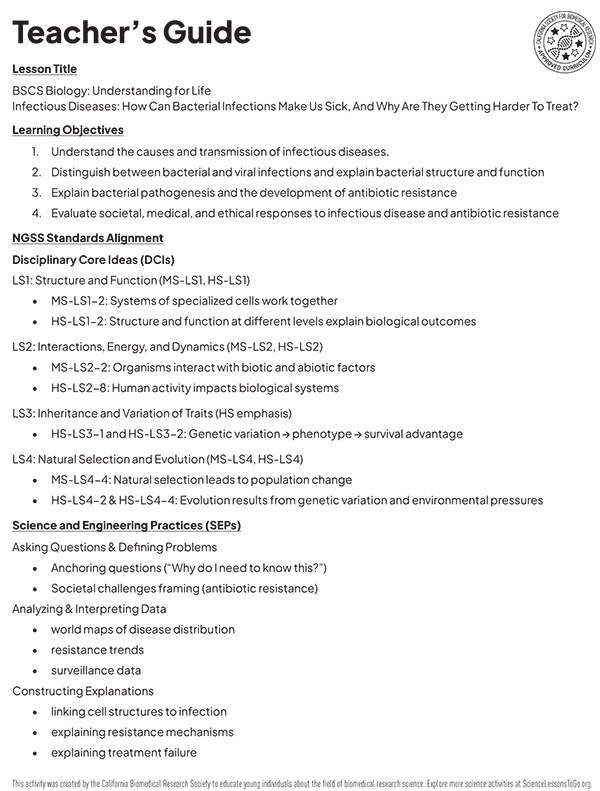
Infectious Diseases: BSCS Biology: Understanding for Life
Lesson
Includes a Teacher’s Guide. This NGSS-aligned resource explores virology, vaccines, viral evolution, public health, and emerging infectious diseases, connecting biology to real-world research and decision-making. It supports LS1–LS4 standards and practices in data analysis, explanation, and evidence-based argumentation.
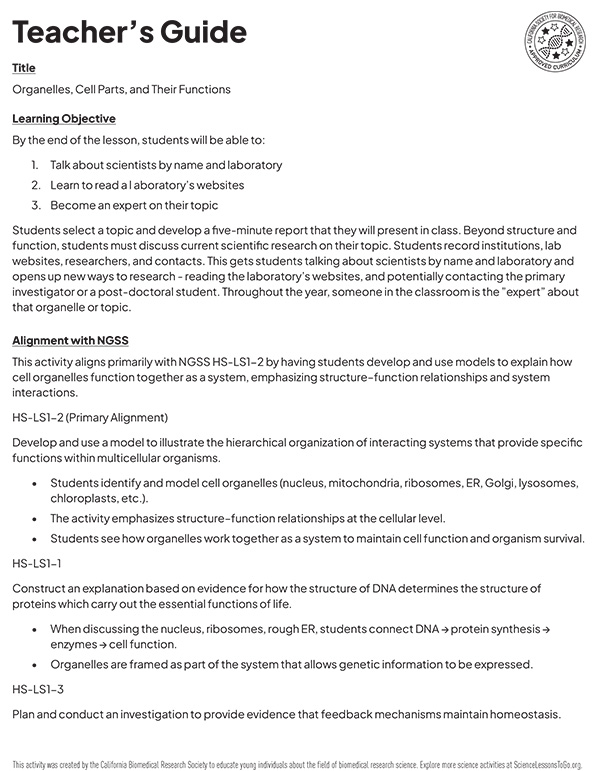
Organelles, Cell Parts, and Their Functions
Lesson
Includes a Teacher’s Guide. This NGSS-aligned high school resource explores cell organelles, cellular systems, protein synthesis, membrane transport, genetics, and biomedical research through student-led modeling, presentations, and analysis. It supports HS-LS1-1, HS-LS1-2, and HS-LS1-3, emphasizing models, explanations, systems thinking, scientific communication, and structure–function relationships.
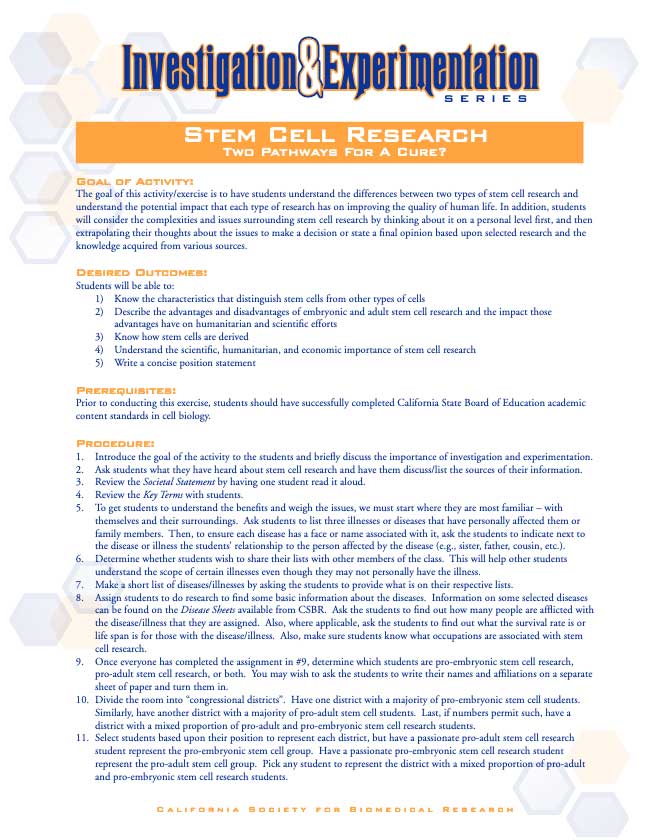
Investigation & Experimentation Series: Discussion of Stem Cells
Lesson
Includes a Teacher’s Guide. This NGSS-aligned resource engages students in inquiry and debate about embryonic and adult stem cell research, including cell differentiation, ethics, biotechnology, public policy, and medical applications. It supports LS1, LS3, and ETS1 standards, emphasizing evidence-based argument, scientific communication, ethical reasoning, research evaluation, and biotechnology’s societal impacts.
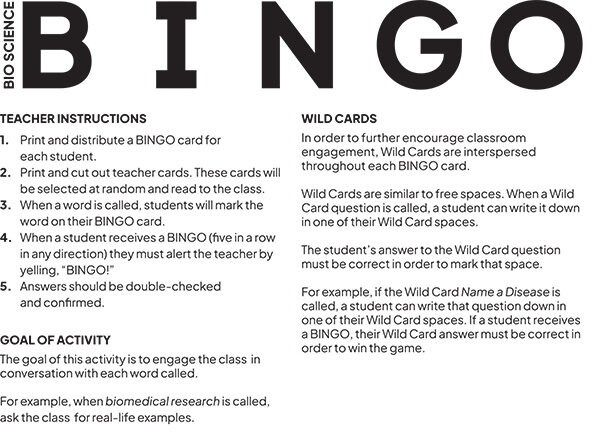
Biology Science Bingo
Activity
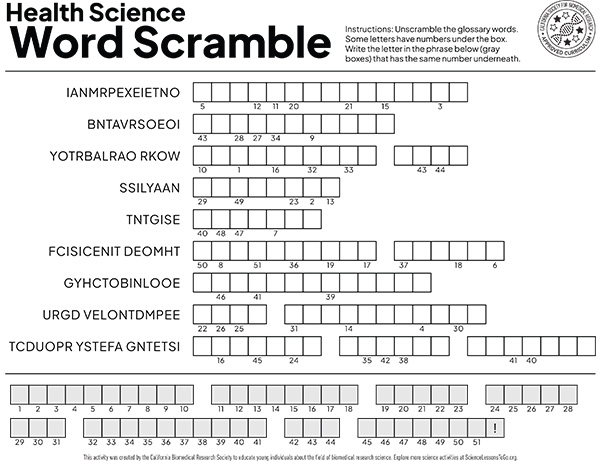
Health Science Word Scramble
Activity
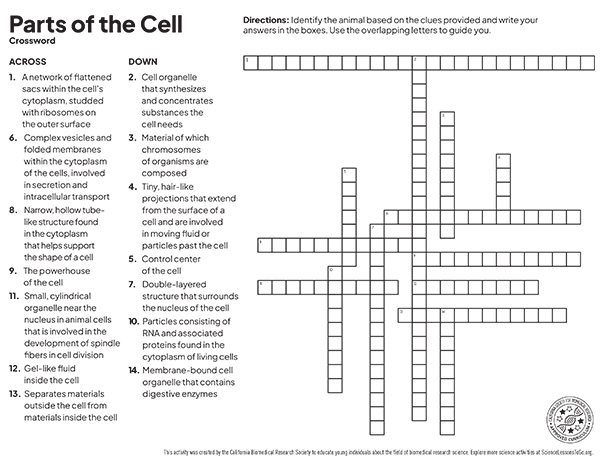
Parts of the Cell Crossword
Activity
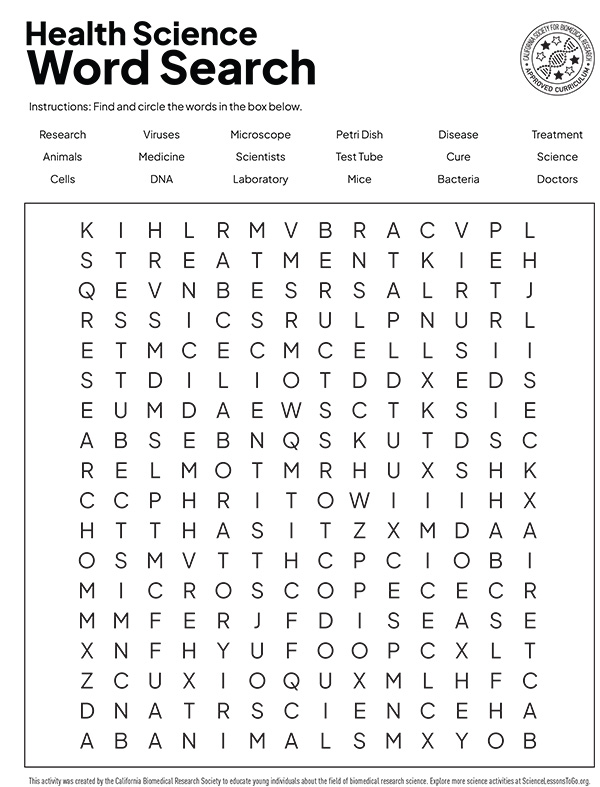
Health Science Word Search
Activity
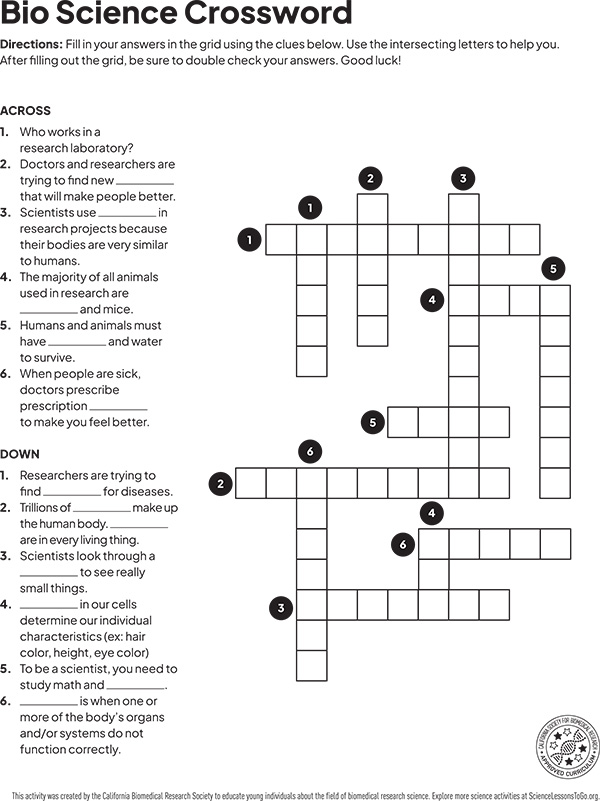
BioScience Crossword Puzzle
Activity
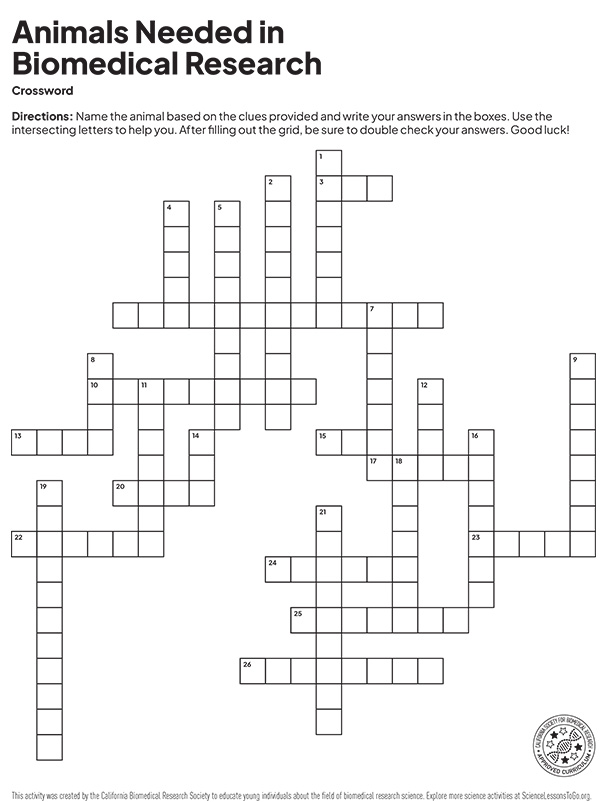
Animals Needed in Research Crossword
Activity
Middle School Curriculum Materials
Organelles, Cell Parts, and Their Functions
Lesson
Includes a Teacher’s Guide. This NGSS-aligned middle school resource explores cell organelles, structure and function, protein synthesis, membrane transport, genetics, and biomedical research through student-led investigation, modeling, and presentations. It supports MS-LS1 and MS-LS3 standards, emphasizing models, explanations, systems thinking, scientific communication, and structure–function relationships.
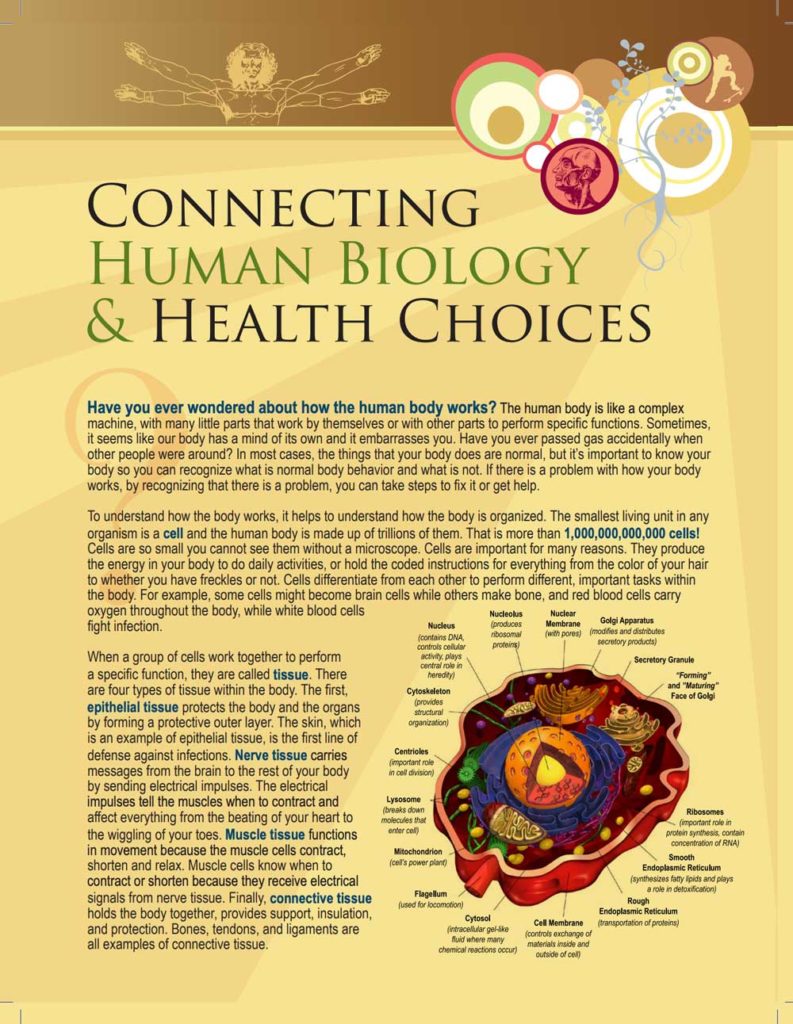
Connecting Human Biology and Health Choices
Lesson
This NGSS-aligned resource explores human biology, infectious and genetic diseases, public health, biomedical research, and healthy decision-making through real-world health challenges and medical advances. It supports LS1, LS3, LS4, and ETS1 standards, emphasizing inquiry, experimentation, data analysis, evidence-based reasoning, and health-related problem-solving.
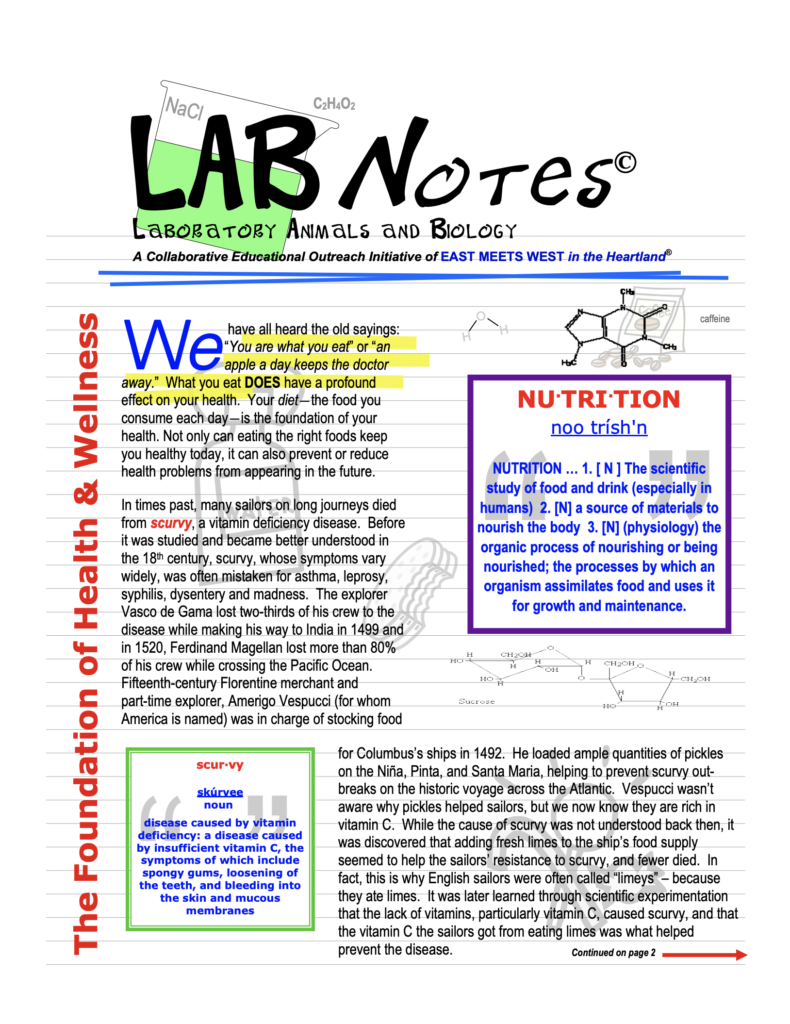
LabNOTES: Nutrition
Lesson
This NGSS-aligned middle school resource explores nutrition, food safety, genetics, biotechnology, public health, and biomedical research, including how diet, disease prevention, food systems, and animal research affect health. It supports MS-LS1, MS-LS2, MS-LS3, and MS-ETS1, emphasizing data analysis, systems thinking, evidence-based reasoning, health decisions, and biotechnology’s societal impacts.
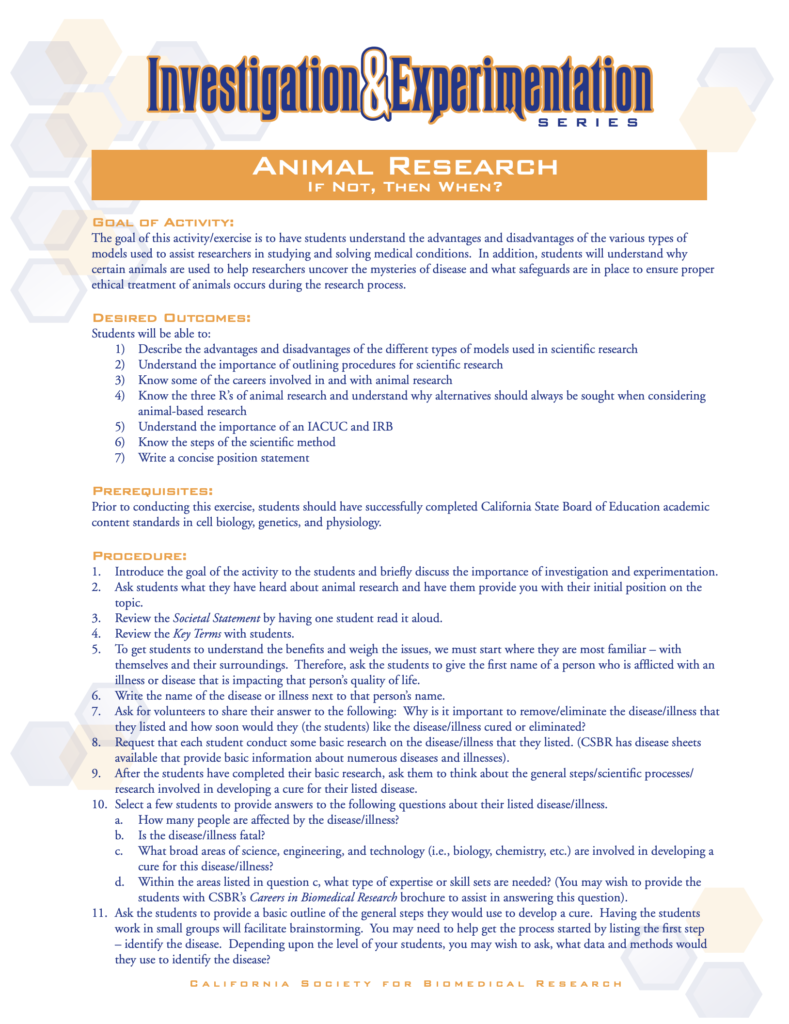
LabNOTES: Toxicology
Lesson
This NGSS-aligned middle school resource explores toxicology, risk assessment, environmental health, chemical safety, biomedical research, and animal and non-animal research models. It helps students evaluate risk versus perception and supports MS-LS1, MS-LS2, MS-ETS1, and MS-ESS3, emphasizing data analysis, evidence evaluation, systems modeling, and informed public health and environmental safety decisions.
Analysis of a Scientific Current Event
Lesson
Includes a Teacher’s Guide. This NGSS-aligned middle school activity builds scientific literacy through analyzing current science and biomedical news, identifying research questions and hypotheses, evaluating evidence, and presenting scientific ideas. It supports SEPs 1, 6, and 8, Crosscutting Concepts, and interdisciplinary connections across LS, PS, ESS, and engineering.
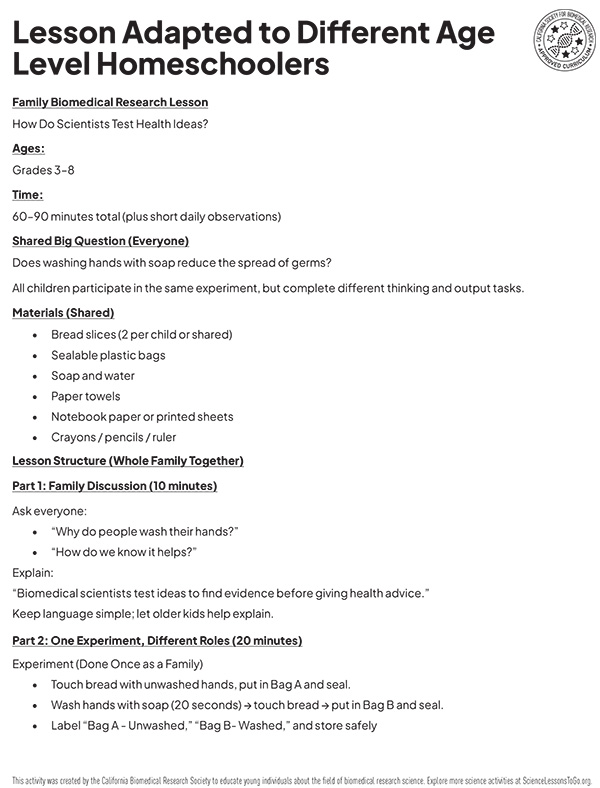
How Do Scientists Test Health Ideas?
Lesson
For homeschoolers in grades 3–8; includes a Teacher’s Guide. This inquiry-based biomedical science lesson explores germ transmission and disease prevention through handwashing experiments, data collection, and hypothesis testing. It supports MS-LS1, MS-LS2, and practices in asking questions, planning investigations, analyzing data, constructing explanations, and applying evidence to public health.
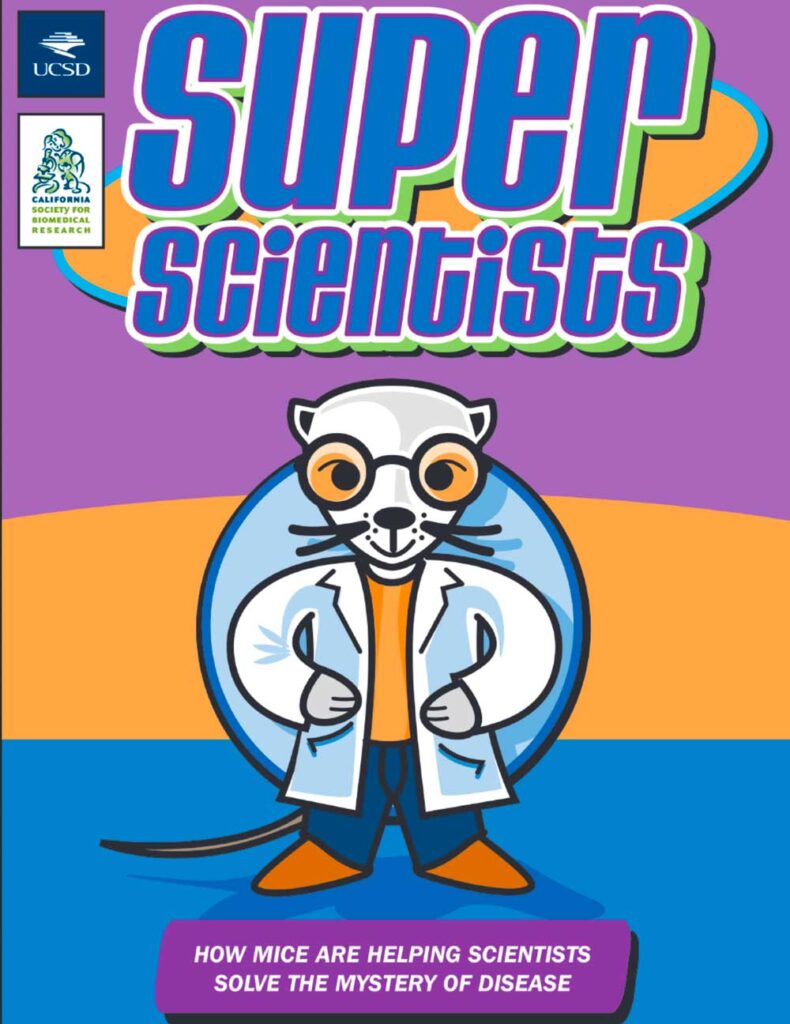
Super Scientists: How Mice are Helping Scientists Solve the Mysteries of Disease
Lesson
This NGSS-aligned middle school resource explores genetics, heredity, DNA, transgenic research, gene therapy, and how scientists use laboratory mice and genetic technologies to study disease. It supports MS-LS1, MS-LS3, and MS-LS4, emphasizing modeling, explanation, evidence-based reasoning, ethical discussion, and real-world applications of biotechnology and medical research.
Animals Needed in Research Crossword
Activity
Health Science Word Scramble
Activity
Biology Science Bingo
Activity
Parts of the Cell Crossword
Activity
BioScience Crossword Puzzle
Activity
Elementary School Curriculum Materials
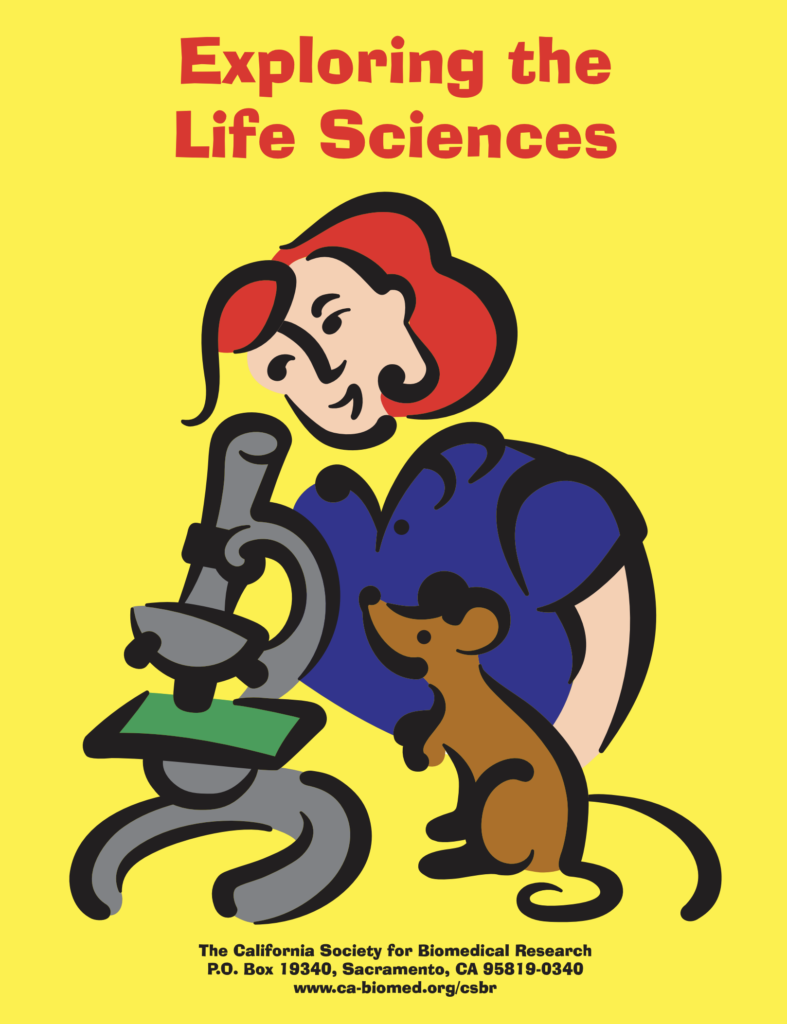
Exploring the Lifesciences: A K-4 Activity Book
Lesson
This K–4 activity book introduces living organisms, life cycles, genetics, microorganisms, the scientific method, and biomedical careers through games, experiments, and illustrations. It supports LS1–LS4, Science and Engineering Practices, and Crosscutting Concepts.
Super Scientists: How Mice are Helping Scientists Solve the Mysteries of Disease
Lesson
This NGSS-aligned elementary resource explores genetics, heredity, DNA, disease research, and laboratory animals’ role in biomedical science through engaging explanations, vocabulary, and inquiry-based activities. It supports 3-LS1, 3-LS3, and 4-LS1, emphasizing questioning, modeling, explanation, and solving real-world health problems.
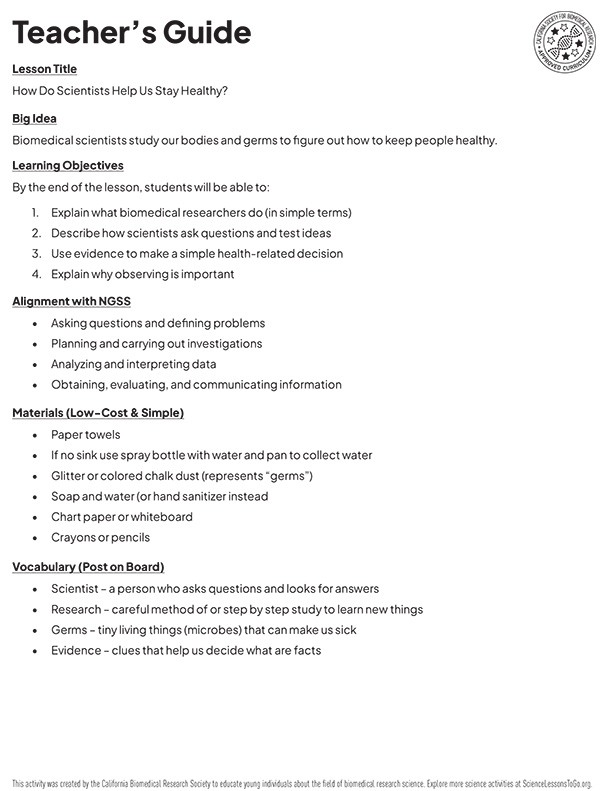
How Do Scientists Help Us Stay Healthy? 3-6
Lesson
Includes a Teacher’s Guide. This NGSS-aligned resource for grades 3–6 explores biomedical science, germs, investigation, and disease prevention through hands-on experiments and collaborative inquiry. It supports 3-LS1, 4-LS1, and 5-LS1, emphasizing questions, investigations, data analysis, evidence, and scientific communication.
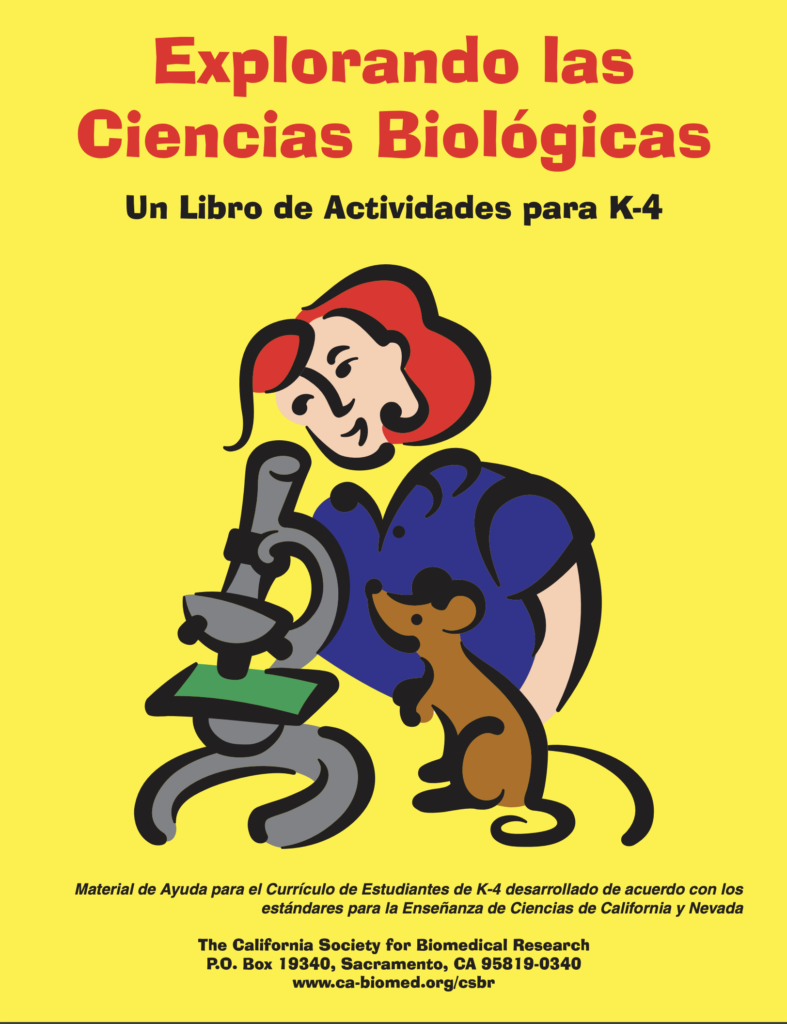
Exploring the Lifesciences: A K-4 Activity Book in Spanish
Lesson
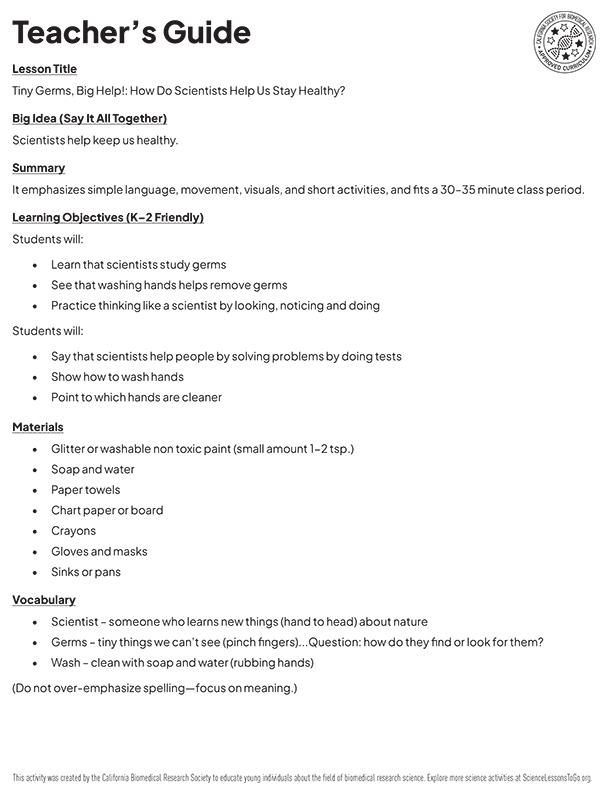
Tiny Germs, Big Help!: How Do Scientists Help Us Stay Healthy? K-2
Lesson
Includes a Teacher’s Guide. This NGSS-aligned K–2 resource explores germs, hygiene, scientific observation, and healthy habits through hands-on activities demonstrating disease prevention and effective handwashing. It emphasizes asking questions, conducting investigations, analyzing data, communicating information, and understanding health, organisms, and human wellness.
How Do Scientists Test Health Ideas? Homeschoolers 3-8
Lesson
This homeschool biomedical science lesson for grades 6–8 explores germ transmission and disease prevention through handwashing experiments, data collection, and hypothesis testing. It supports MS-LS1, MS-LS2, and practices in asking questions, planning investigations, analyzing data, constructing explanations, and applying evidence to public health and biomedical research.
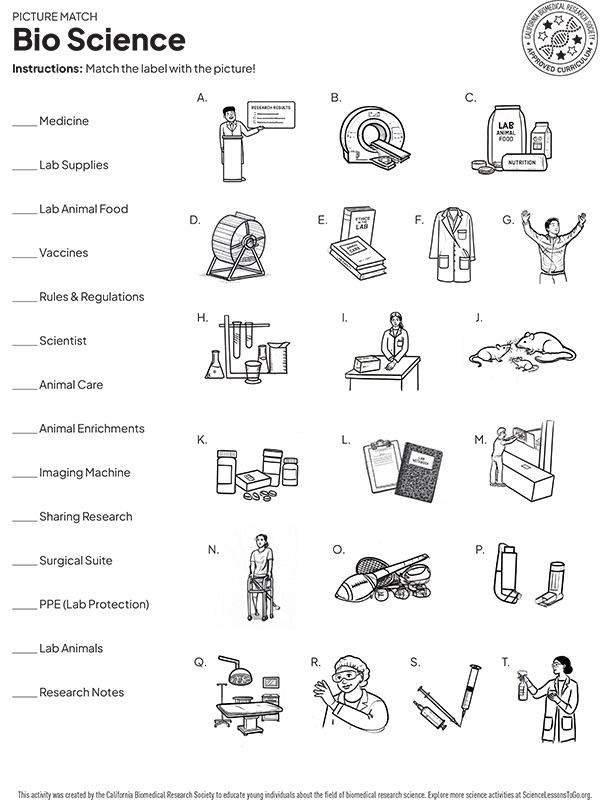
Bio Science Picture Match
Activity
General Curriculum Materials
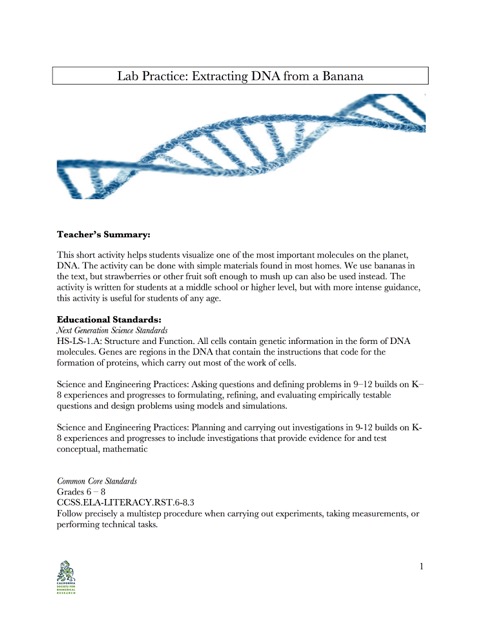
Lab Practice: Extracting DNA from a Banana
Lab
Includes a Teacher’s Guide. This NGSS-aligned middle and high school lab explores DNA structure, genetics, cell biology, and molecular extraction by isolating visible DNA from fruit with household materials. It supports MS-LS1, MS-LS3, and HS-LS1.A, emphasizing laboratory procedures, investigation planning, biological modeling, evidence analysis, and connecting molecular concepts to observable results.
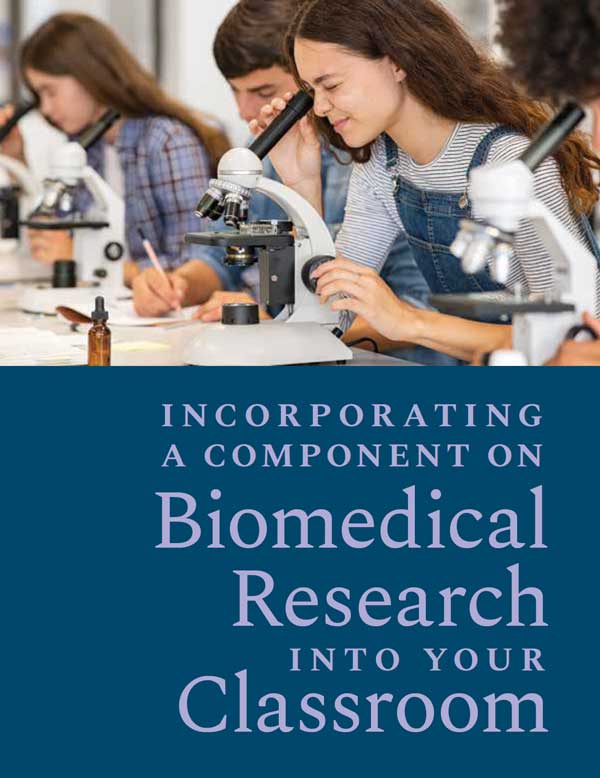
Incorporating a Component on Biomedical Research into Your Classroom
Resource
This educator resource provides guidance for integrating biomedical research, inquiry-based learning, science fairs, ethics, and STEM careers into classroom instruction and student-led investigations. It supports NGSS Science and Engineering Practices, Crosscutting Concepts, LS1, LS2, and ETS1, emphasizing inquiry, problem-solving, communication, data analysis, and evidence-based reasoning.
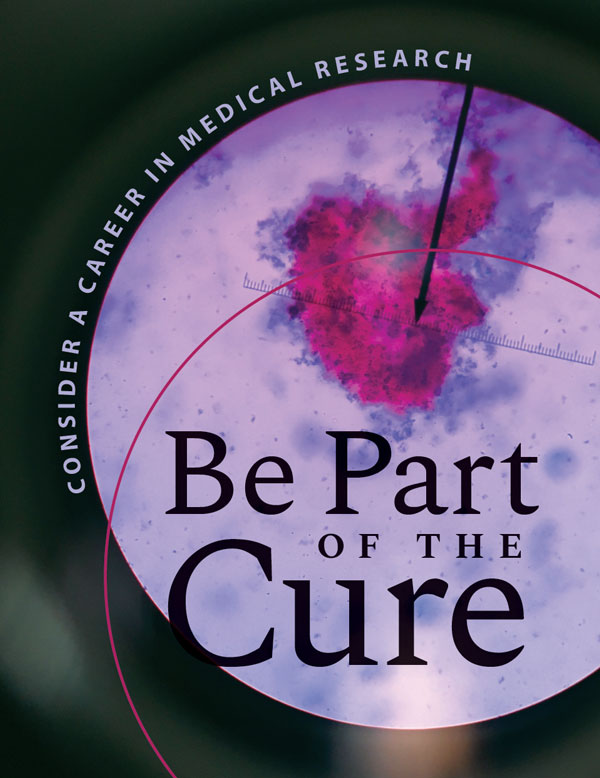
Be Part of the Cure: Consider a Career in Biomedical Research
Resource
This career-focused resource introduces biomedical research, laboratory animal science, drug development, STEM pathways, ethics, and the collaborative process of advancing human and animal health. It supports LS1, LS2, ETS1, and practices in inquiry, systems thinking, collaboration, scientific communication, problem-solving, and real-world biotechnology careers.
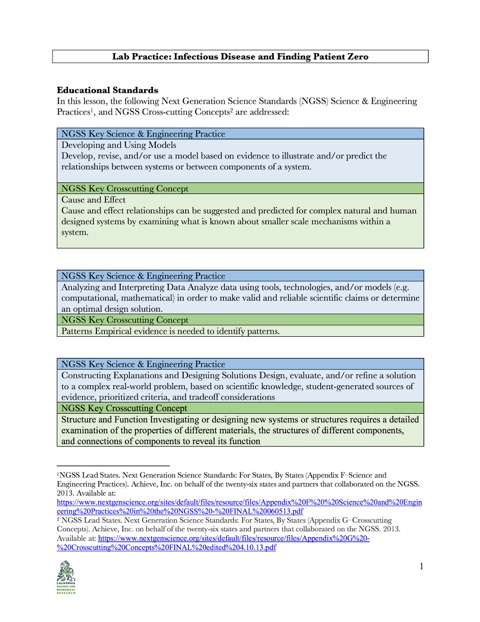
Lab Practice: Simulating the Spread of an Infectious Disease
Lab
Includes a Teacher’s Guide. This NGSS-aligned middle and high school resource uses hands-on simulations and data analysis to explore disease transmission, vaccination, herd immunity, epidemiology, and public health responses. It supports MS-LS1, MS-LS2, MS-LS4, MS-ETS1, HS-LS1, HS-LS2, HS-LS4, and HS-ETS1, emphasizing modeling, systems thinking, evidence-based explanations, and evaluating public health interventions.
Benchtop to Bedside: Biomedical Research and the Process of Drug Development
Resource
This resource explains biomedical research and drug development from discovery and preclinical testing through clinical trials and FDA approval, including ethics and the roles of animal and human studies. It supports LS1–LS3 and ETS1, emphasizing investigation, data interpretation, systems thinking, and evidence-based reasoning.
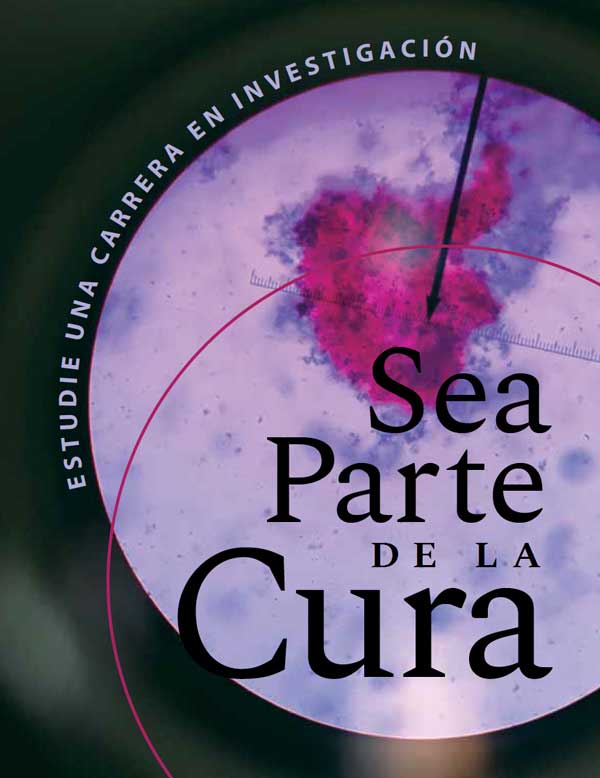
Be Part of the Cure: Consider a Career in Biomedical Research (Spanish)
Resource
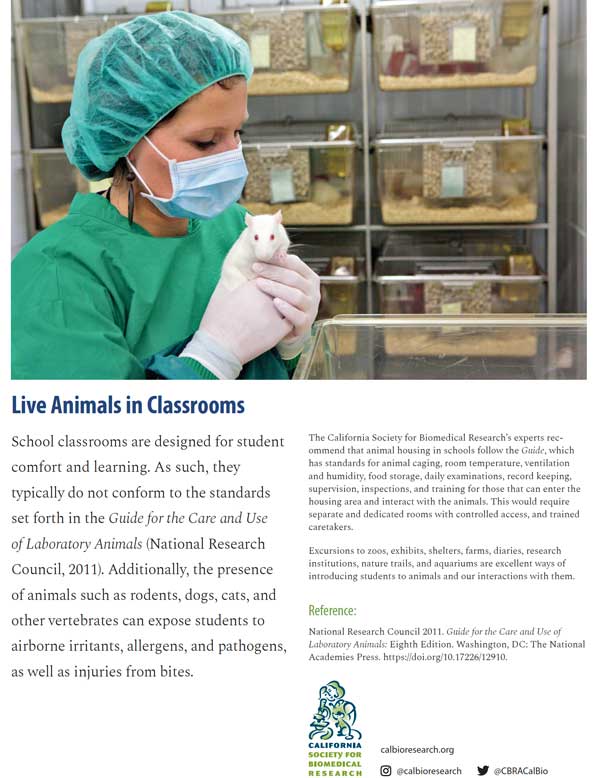
Live Animals in the Classroom
Resource
OUR PROGRAMS
From classroom visits to science fairs, educational materials to public outreach.
FACTS + MYTHS
Get the facts and dispel the myths about research benefitting human and animal health.